


 Request a quote
 Get in touch
 Give us a call
 View our solutions
 Our services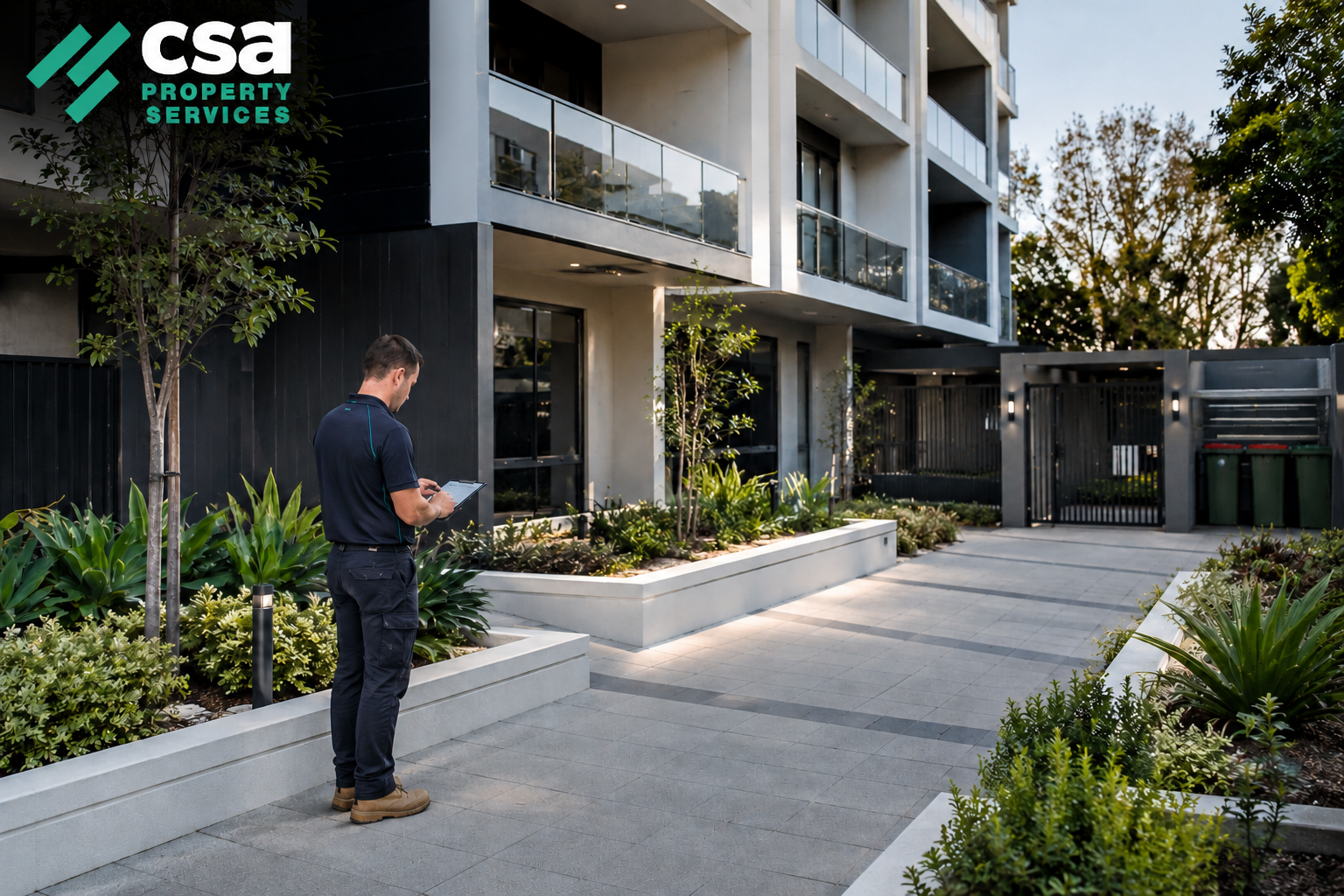
Managing a strata property is easier when maintenance is planned, visible and followed up properly. Shared buildings need regular care across common areas, drainage, lighting, cleaning, landscaping, repairs and safety items, especially when multiple residents, tenants, contractors and visitors use the property every day.
For Perth strata buildings, maintenance is not just about keeping the property looking tidy. Heat, winter rain, reticulation issues, blocked drains, high-use common areas and general wear can all create problems if they are left too long. A small leak, faulty light or damaged path can quickly become a larger repair, a resident complaint or a safety concern.
This strata property maintenance checklist is designed to help strata managers, property managers and owners keep shared properties safer, cleaner, more presentable and easier to manage throughout the year.
Why a strata maintenance checklist matters
Strata properties have many shared spaces and services that need attention at different times. Without a clear maintenance checklist, issues can be missed until they become urgent or more expensive to fix.
A practical checklist gives property managers a clearer view of what needs to be checked, what needs to be actioned and what should be scheduled for later. It also helps reduce confusion when multiple contractors or service providers are involved.
Regular strata maintenance can help improve safety, reduce avoidable repair costs, support better presentation and give residents more confidence that the property is being looked after properly. It also helps strata managers stay ahead of recurring issues instead of only responding when something goes wrong.
Quick strata property maintenance checklist
Use this checklist as a starting point for regular site reviews.
| Maintenance area | What to check |
|---|---|
| Common areas | Entryways, hallways, lifts, stairwells, bin rooms and shared facilities |
| Building exterior | Walls, roofs, gutters, windows, balconies, paintwork and visible damage |
| Plumbing and drainage | Leaks, blocked drains, water pressure, downpipes, stormwater and damp areas |
| Electrical and lighting | Common area lighting, sensors, car park lighting, access systems and faults |
| Safety and access | Trip hazards, handrails, exits, slippery surfaces, signage and pathways |
| Cleaning | Floors, glass, lifts, stairwells, bin areas and external hard surfaces |
| Groundskeeping | Lawns, gardens, reticulation, pruning, weeds and outdoor presentation |
| Pest control | Bin rooms, gardens, damp zones, roof spaces and signs of pest activity |
| Long-term works | Painting, resurfacing, roof repairs, lighting upgrades and planned improvements |
Common area maintenance
Common areas are usually where residents and visitors notice maintenance issues first. Entryways, corridors, lifts, stairwells, car parks and bin rooms are used frequently, so they need regular checks and consistent upkeep.
A common area inspection should look at cleanliness, lighting, flooring, access points, doors, locks, visible damage and any signs of leaks or wear. These areas should feel safe, tidy and easy to move through.
For strata managers, common area checks are also useful because they often reveal early signs of bigger issues. A stain on the ceiling may point to a leak. A repeated mess in the bin room may point to a waste management issue. A damaged tile or loose fitting may become a safety risk if it is not addressed.
Keeping common areas maintained helps reduce complaints and creates a better standard for everyone using the property.
Building exterior and visible repairs
The outside of a strata building needs regular attention, particularly in Perth where properties can be exposed to strong sun, wind, rain and, in some areas, coastal conditions.
Exterior maintenance should include visual checks of walls, windows, doors, gutters, downpipes, balconies, balustrades, external walkways and painted surfaces. Cracks, water stains, loose fittings, peeling paint or damaged materials should be recorded and reviewed before they become larger repair jobs.
Not every issue will need urgent work, but regular inspections help property managers understand what is happening across the building. This makes it easier to prioritise repairs, plan budgets and avoid last-minute maintenance surprises.
Where structural concerns are identified, they should be assessed by a suitably qualified professional.
Plumbing, drainage and water issues
Water issues can become expensive if they are not picked up early. In strata properties, one plumbing or drainage issue can affect multiple residents, shared areas or building systems.
Regular checks should look for leaks, damp smells, ceiling stains, mould-prone areas, slow drains, blocked stormwater points, damaged downpipes and pooling water after rain. Reticulation and irrigation should also be checked where landscaped common areas are part of the property.
In Perth, it is sensible to review gutters, downpipes and drainage before the wetter months. A blocked gutter or poor stormwater path may seem minor, but it can lead to water ingress, staining, surface damage or more serious building issues.
A good maintenance process should make it easy for residents, cleaners and contractors to report water issues quickly.
Electrical and lighting maintenance
Lighting plays an important role in safety, security and everyday access. Poor lighting in stairwells, car parks, entrances or pathways can create unnecessary risk and frustration for residents.
Regular checks should cover common area lights, car park lighting, external lighting, motion sensors, timers, switches, emergency lighting and access systems. Recurring faults should be logged, not just patched temporarily.
Electrical work should always be handled by licensed trades. The role of the checklist is to help identify faults, record where they are happening and arrange the right support before the issue becomes more disruptive.
Reliable lighting also improves the overall presentation of the property, especially around entrances and high-use shared areas.
Safety and access checks
Safety maintenance is not only about compliance. It is about making sure shared spaces are practical, clear and suitable for everyday use.
Paths, stairs, walkways, car parks, gates, doors and shared access points should be checked regularly. Loose handrails, damaged pavers, slippery surfaces, blocked exits, poor lighting and unclear signage can all create avoidable risks.
These checks are especially important in larger strata complexes, mixed-use developments and commercial properties where traffic is higher and responsibilities are more complex.
Photo documentation can also be helpful. It gives strata managers a clearer record of issues, completed repairs and recurring maintenance concerns.
Cleaning and presentation
Cleaning is one of the most visible parts of strata maintenance. It affects how the property feels, how residents experience shared areas and how well the building presents to visitors, tenants and contractors.
Regular cleaning should cover entry areas, floors, stairwells, lifts, glass, touchpoints, bin rooms and shared facilities. External hard surfaces may also need pressure cleaning from time to time, especially where dirt, staining, moss or general build-up affects presentation or safety.
Cleaning teams can also play an important role in reporting maintenance issues. They are often on site regularly and may notice leaks, damage, dumped rubbish, broken fittings or hygiene concerns before anyone else does.
A strong strata maintenance process connects cleaning with reporting, so problems do not sit unnoticed.
Landscaping and groundskeeping
Outdoor areas can have a major impact on street appeal and resident satisfaction. In Perth, landscaping also needs practical attention because dry weather, reticulation faults, weeds and overgrown plants can quickly affect common spaces.
Groundskeeping should include mowing, edging, pruning, weed control, garden bed maintenance, green waste removal and reticulation checks. Paths and outdoor access areas should stay clear, and any branches, debris or uneven surfaces should be addressed.
Poorly maintained outdoor areas can make a property look neglected. They can also affect safety, drainage and access if left unmanaged.
Consistent groundskeeping helps keep the property presentable and usable throughout the year.
Pest control and hygiene risks
Pest issues can become difficult to manage in strata buildings if they are ignored. Bin rooms, gardens, damp areas, roof spaces and shared storage areas are common places where pest activity may appear.
Regular maintenance should include checking for signs of rodents, ants, cockroaches, termites or other pest concerns. Waste areas should be kept clean and well managed, as poor hygiene can attract pests and create complaints from residents.
Pest control is most effective when it is proactive. Clean bin areas, good drainage, tidy gardens and regular inspections all help reduce avoidable problems.
If pest activity is identified, it should be investigated and managed by the right provider before the issue spreads.
Seasonal strata maintenance for Perth properties
A useful maintenance checklist should also consider Perth’s seasonal conditions. Some tasks are better completed before weather changes place extra pressure on the property.
Spring maintenance
Spring is a good time to refresh the property after winter and prepare outdoor areas for heavier use. Gardens, reticulation, outdoor cleaning, gutters, downpipes and pest activity should all be reviewed.
It is also a good time to inspect external surfaces, courtyards and shared outdoor areas. Small repairs and cleaning tasks completed in spring can help the property present better through the warmer months.
Summer maintenance
Perth summers can be tough on gardens, outdoor finishes, waste areas and shared spaces. Reticulation should be checked, dry garden debris should be managed, and bin rooms may need closer attention due to heat and odour.
Outdoor surfaces, shade areas, pathways and external lighting should also be reviewed. Summer maintenance is about keeping the property clean, safe and practical during hotter conditions.
Autumn maintenance
Autumn is the right time to prepare for rain and shorter daylight hours. Gutters, downpipes, stormwater drains, roof areas and external lighting should be checked before winter weather arrives.
Overhanging branches, blocked drains and minor external repairs should also be reviewed during this period. A little preparation in autumn can help reduce winter maintenance issues.
Winter maintenance
Winter maintenance should focus on water management, safe access and fast response to weather-related issues. Leaks, water ingress, slippery paths, blocked drains and storm damage should be monitored closely.
Common area lighting is also important during winter, particularly around entrances, stairs, car parks and pathways. Issues should be reported and actioned quickly to reduce risk and disruption.
Long-term strata maintenance planning
Not every maintenance task needs to happen every month. Some works require longer-term planning, approval and budgeting.
A long-term maintenance plan may include repainting, roof repairs, driveway resurfacing, lighting upgrades, access system upgrades, drainage improvements, landscaping improvements, major cleaning programs and building repair works.
Long-term planning helps owners and managers make better decisions. It also reduces the chance of large, unexpected costs appearing without warning.
For strata properties, this type of planning can support more transparent communication between strata managers, councils of owners and residents.
Why one maintenance partner can make strata management easier
One of the biggest challenges in strata maintenance is coordination. A single property may need cleaners, plumbers, electricians, landscapers, pest control providers, building repair contractors and other specialist trades.
When every service is managed separately, strata managers can spend too much time chasing updates, comparing availability and following up incomplete jobs.
Working with one property maintenance partner can make the process easier. It gives managers a clearer point of contact, better visibility over works and a more practical way to coordinate different maintenance needs across the property.
For busy strata and commercial property managers, this can reduce admin and help jobs move from inspection to completion with less back-and-forth.
Need help with strata property maintenance in Perth?
CSA Property Services supports strata and commercial properties across Perth with practical property maintenance, building repairs, cleaning, groundskeeping, inspections and specialist trade coordination.
Whether you need help with reactive repairs, scheduled maintenance or ongoing site support, CSA can help keep your property safer, cleaner, more presentable and easier to manage.
Request a quote today or get in touch with CSA Property Services to discuss your property maintenance needs.
FAQs
What is a strata property maintenance checklist?
A strata property maintenance checklist is a practical guide that outlines the regular tasks needed to keep shared property areas safe, clean, functional and well maintained. It can include common area cleaning, repairs, lighting checks, plumbing, drainage, landscaping, safety items and long-term maintenance planning.
How often should strata maintenance be completed?
Some tasks should be completed weekly or monthly, such as cleaning, common area checks and lighting reviews. Other tasks, such as gutter cleaning, roof inspections, drainage checks and larger repair works, may be scheduled seasonally or annually depending on the property.
Who is responsible for strata property maintenance?
Responsibility depends on the strata scheme and management arrangements. Common property is usually managed through the strata company, council of owners or appointed strata manager. Individual owners may be responsible for maintenance within their own lot.
What are common maintenance issues in Perth strata buildings?
Common issues include blocked drains, gutter problems, roof leaks, lighting faults, reticulation issues, cracked surfaces, bin room hygiene problems, pest activity, worn paintwork and general common area damage.
Why is planned maintenance better than only fixing urgent issues?
Planned maintenance helps identify issues earlier, reduce disruption and make repair costs easier to manage. Reactive repairs are still needed, but relying only on urgent fixes can lead to higher costs, more complaints and avoidable property damage.
Can CSA Property Services help with ongoing strata maintenance?
Yes. CSA Property Services can assist with practical maintenance, building repairs, cleaning, groundskeeping, inspections, reporting and specialist trade coordination for strata and commercial properties across Perth.
